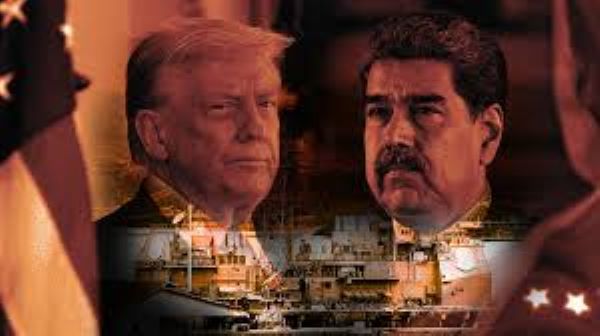
As is well known, at the beginning of the year the capture of Venezuelan President Nicolás
Maduro by the United States as a result of a “special operation” conducted on Venezuelan
territory marked a sharp turning point in the contemporary system of international relations.
This event should be understood not merely as the neutralization of a political leader, but as
the transition of a long-accumulating crisis of political legitimacy, economic collapse, and
geopolitical confrontation among major powers into an open phase. What occurred not only
plunged Venezuela into a new stage of profound uncertainty, but also raised serious questions
about the “practical effectiveness” of international institutions and international law itself.
At the root of the Venezuelan crisis lie structural problems that have developed over decades.
The collapse of an economic model excessively dependent on oil revenues and the deepening
of authoritarian governance rendered the country politically and socially fragile. Under
Maduro’s rule, the legitimacy of elections was not internationally recognized; the judiciary
and the legislature were subordinated to the executive; and state governance was effectively
personalized, resulting in the establishment of a fully authoritarian regime. The Trump
administration, for its part, framed this situation not merely as a democratic crisis, but as a
strategic threat in the context of regional security, drug trafficking, and transnational criminal
networks, thereby claiming for itself the right to conduct special military operations in
Venezuela. Maduro’s capture was justified precisely on the basis of this security narrative.
However, the political vacuum that emerged in Venezuela following Maduro’s detention did
not resolve the crisis; on the contrary, it deepened it further. Although interim governance
mechanisms were formally put into place, the state’s actual capacity to govern weakened.
Fragmentation within the military, the political elite, and the bureaucratic apparatus
accelerated, while society became sharply divided between those who viewed the intervention
as salvation and those who regarded it as an overt violation of sovereignty. This division
naturally makes the formation of a national consensus and a sustainable political transition in
Venezuela almost impossible.
As a result, serious contradictions also emerged on the economic front between expectations
and reality. Although some hopes for foreign investment appeared in the short term,
instability negatively affected oil production, the financial system, and social welfare
mechanisms. As in any crisis, the population has been the most affected. For ordinary
citizens, the crisis is felt in very concrete terms: renewed inflationary pressures, shortages in
social services, and the risk of a new wave of migration have once again come to the fore.
Thus, the post-Maduro phase does not represent automatic stabilization, but rather bears the
classic characteristics of a “transition crisis.”
The assessment of this event from the perspective of international law reveals an even deeper
normative problem. According to the fundamental principles of the UN Charter, territorial
integrity, political independence, and the prohibition of the use of force are the cornerstones
of the international order. The United States’ conduct of military operations on Venezuelan
territory without an explicit mandate from the UN Security Council stands in clear
contradiction to these principles. Although official Washington justified its actions on the
grounds of individual responsibility for grave international crimes and the argument of
universal jurisdiction, such mechanisms in international law are typically applied through
international courts and collective decision-making processes.
An even more problematic issue concerns the immunity of a sitting head of state. According
to classical international law, “heads of state are broadly protected from the jurisdiction of
foreign states, and such immunity can be limited only by the decision of an international
tribunal or after they leave office.” This precedent demonstrates that while the legal norm
formally exists, it has in practice been subordinated to power politics. Although humanitarian
intervention or the doctrine of the “responsibility to protect” has been presented as a legal
basis in this context, even that doctrine presupposes a collective decision-making mechanism
rather than unilateral action. It is precisely at this point that the U.S.–Venezuela crisis reveals
a broader and more tangible reality: the de facto erosion of international law as a normative
system. The problem lies not in the absence of legal norms, but in their selective application
in accordance with political objectives. The effective paralysis of the UN Security Council
due to the veto mechanism, the unilateral actions of major powers, and the subsequent
justification of these actions through legal rhetoric all point to the functional collapse of the
collective security system. International law is no longer a norm that determines behavior; it
has become a tool for explaining the use of force after the fact. This process reinforces the
tendency in international law toward the “normalization of the exception.” States increasingly
act not on the basis of the question “Is this lawful?” but rather “Can I do this?” As a result, the
principle of legal equality loses its real substance, and the international system enters a phase
more openly based on the balance of power.
Regrettably, in the final analysis, the capture of Nicolás Maduro did not resolve the
Venezuelan crisis; instead, it transformed it into a component of a broader geopolitical and
legal crisis. This event represents not only a violation of a state’s sovereignty, but also a
legitimacy crisis of the UN system and international law itself. The existing global legal order
remains formally intact, yet is collapsing in substance, and if this situation persists,
international relations will enter an even more dangerous phase—one based less on law and
more on power.
European representative of the” Boyukmillet”
Khayal Mustafayev